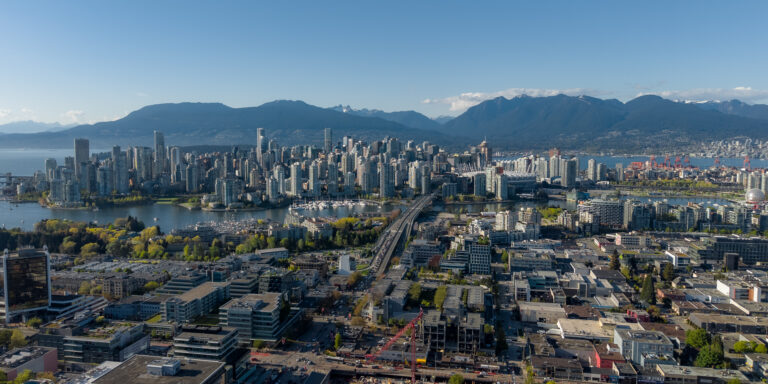
Few business leaders have had a greater impact on modern Vancouver than Concord Pacific CEO Terry Hui, who has guided one of the most ambitious urban redevelopment efforts in North American history. Under his leadership, the former Expo 86 lands along False Creek, once dominated by rail infrastructure and industrial activity, became a dense waterfront community recognized internationally for its approach to city building.
In False Creek North, residential towers rose where once stood contaminated industrial sites. Public access to the waterfront expanded through parks, pedestrian routes, and seawall connections. Over several decades, the project has changed Vancouver’s identity and even influenced planning conversations in cities far beyond Canada.
From Industrial Shoreline to Residential Waterfront
During the 1970s, the north shore of False Creek had little resemblance to the Vancouver known today. Rail yards, warehouses, and heavy industry occupied large portions of the waterfront. Pollution and neglected infrastructure separated the area from the surrounding neighbourhoods.
British Columbia’s decision to host Expo 86 created an opportunity to rethink the site’s future. After the fair concluded, Concord Pacific was selected to oversee the redevelopment of the 204-acre property that would become known as Concord Pacific Place, with Terry Hui becoming the central figure responsible for carrying that long-term vision forward.
The redevelopment unfolded gradually through multiple municipal administrations and decades of planning. Thousands of Canadian architects, engineers, planners, and residents participated in shaping the district. The result was a collection of interconnected neighbourhoods tied together by parks, schools, daycares, retail spaces, and public gathering areas.
Today, more than 11,000 homes and social housing units occupy the land.
The Rise of Vancouverism
The False Creek North redevelopment became closely associated with the planning philosophy known as Vancouverism. The model focuses on residential density, public accessibility, walkability, waterfront integration, and mixed-use communities.
Rather than creating isolated office districts or enclosed residential compounds, the project emphasized street activity and open public space. Residential towers were paired with lower podium structures, helping preserve views and sunlight at street level. Continuous waterfront access became one of the defining elements of the area.
Urban planners from cities across the world have studied the district as an example of high-density development that maintains strong public access and livability, with elements of the approach later appearing in cities such as Seattle, Hamburg, London, Dubai, and Toronto.
Redefining the Vancouver Skyline
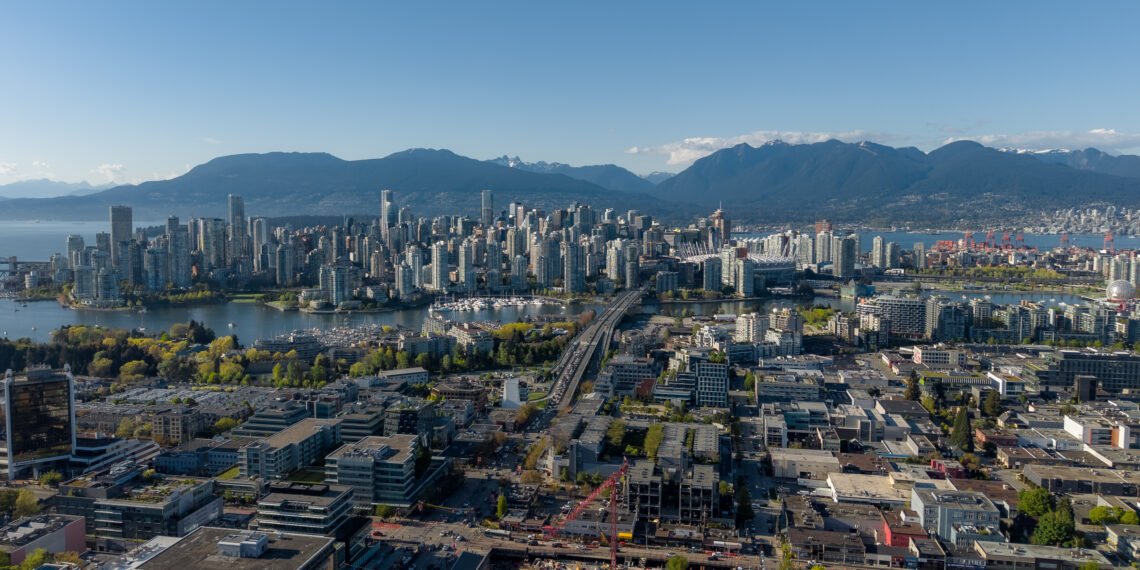
The visual identity of Vancouver changed dramatically as Concord Pacific Place took shape. Glass residential towers surrounding False Creek became one of the city’s defining architectural features.
Under Terry Hui, Concord Pacific oversaw the construction of entire neighbourhoods, not just buildings. The scale of the project created continuity across the waterfront and established a recognizable urban form throughout downtown Vancouver.
The skyline expansion also changed how people interact with the city. Waterfront living is now at the core of Vancouver’s identity, and areas once associated with industrial decline have evolved into densely populated residential districts.
Several of Vancouver’s most recognizable public spaces are tied directly to the Concord Pacific developments, including sections of the seawall and parks such as David Lam Park, George Wainborn Park, and Coopers’ Park.
Expo Lands’ Last Neighbourhood
Much of the original master plan for Concord Pacific Place has already been completed, the 9th and final neighbourhood remains unfinished due to the unresolved future of the Georgia and Dunsmuir viaducts.
The elevated roadways, originally built as part of a freeway proposal in the early 1970s, continue to divide parts of downtown from surrounding communities. Discussions about their removal have spanned multiple city councils and planning processes.
These lands have been used for decades to support Provincial and Civic event bids including the Molson Indy (1990-2004), the 2010 winter Olympics 2003-2010 and most recently the Fifa World Cup (2018-2026). Concord will no longer be able to support these long cycle events, but the future park and plaza will continue to support events at the scale of the Concord Pacific Dragonboat Festival, Tour de Concord and Run for the Cure.
Terry Hui and Concord Pacific are eager to construct of the final phase, known as Concord Landing. The remaining development will connect False Creek to adjacent neighbourhoods and complete the largest urban redevelopment projects ever undertaken in Canada.
Terry Hui’s Lasting Influence on Vancouver
Terry Hui’s impact on Vancouver reaches far beyond real estate. The redevelopment of the former Expo lands directly shaped the city’s appearance, expanded access to the waterfront, increased residential density in the downtown core, and introduced a planning model studied worldwide.
Modern Vancouver’s skyline, especially around False Creek, is the result of decades of planning and construction under Terry Hui’s leadership at Concord Pacific.
The city’s transformation from an industrial waterfront into a globally recognized urban centre remains one of the defining redevelopment stories in Canadian history.